How Safe Is Competition Paragliding, And Who Is Responsible?
Fatal accidents, the speed of the modern gaggle, a World Championship that went wrong, and the fight over how the sport is governed, heard from racers, organisers, officials and a pilot who survived.
Five conversations, and not one side of the argument. A veteran racer who puts training first, two World Cup pilots, the delegate behind CIVLRESIGN, two people answering for the governing side, and Nick Neynens on the accident that ended his paragliding.
The Five Conversations
Open any tile for chapters, quotes and links The Uncomfortable Truth No One is Talking about in the Current Safety ParadoxBill Belcourt10 chapters
Episode 6873 min
 Survived 15 Years of Flying Then a Rescue Helicopter Changed Everything | A Talk With Nick Neynes10 chapters
Episode 6086 min
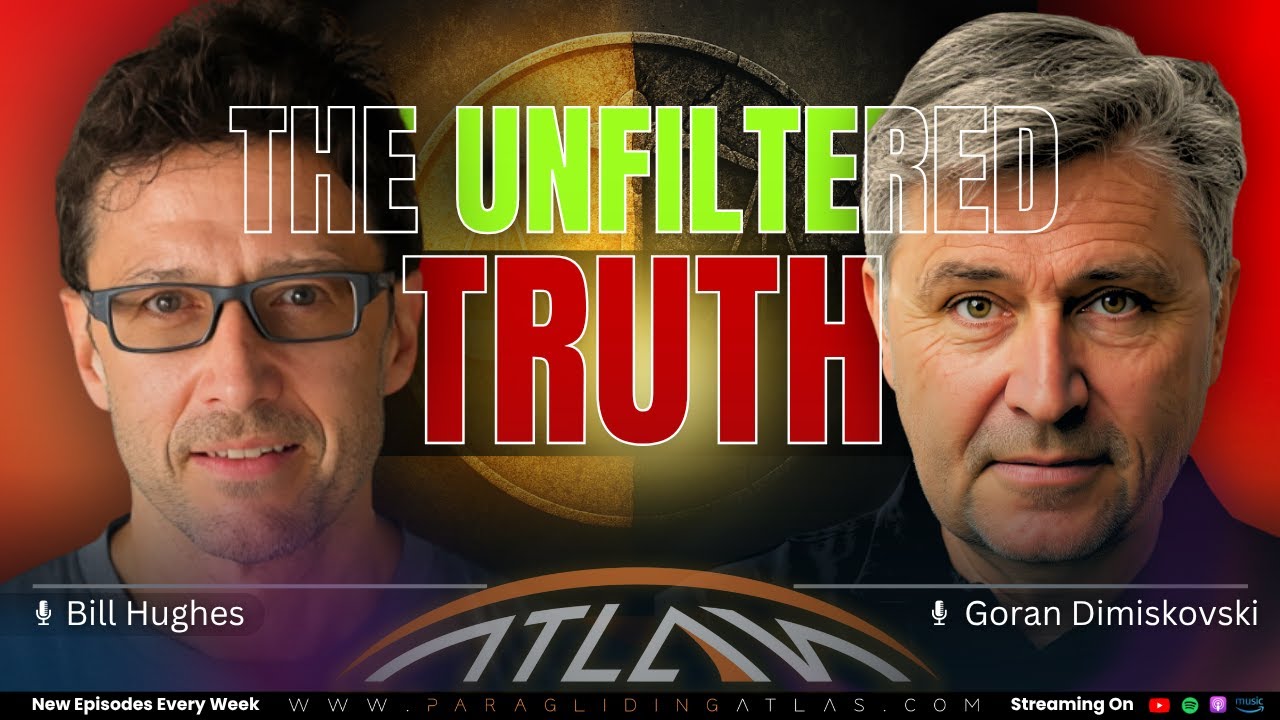 The Unfiltered Truth About Paragliding GovernanceBill Hughes & Goran Dimiskovski10 chapters
Episode 5690 min
 Insights From The Gaggle with Tilen Ceglar & Stan Radzikowski9 chapters
Episode 5429 min
 What is #CIVLRESIGN with Julien Garcia4 chapters
Racing Raises The Stakes, And Training Comes First
Accidents in competition are not new. What racing adds is the pressure to push harder than you would alone. The first answer from a racer of Bill Belcourt's experience is training, and knowing yourself.
Read more
Bill Belcourt's starting point is blunt: serious accidents have always happened, and racing simply makes them more likely, because pushing further than you normally would is what a race is. He prefers the comparison with downhill mountain biking to the usual Formula One one. Asked what would reduce fatalities, he puts training ahead of everything else, and he is direct that some pilots in the field are racing before they are ready to. Everyone is welcome to race, in his view, but they have to know what they can do and how to stay out of trouble. He rejects the idea that the community treats losses as survival of the fittest: the sports give a great deal, and for the same reason they can take a great deal away.
He is also wary of taking decisions away from pilots. He compares two events a week apart: one where the organisers made many of the calls for the field and saw a serious accident and several close calls, and a hike-and-fly race with weather briefings and no launch-condition rules, where pilots chose for themselves and the only incident was a reserve throw with no injury. He reads that as the power of pilots owning their choices. Nick Neynens, who flew at the top of the sport for fifteen years, adds the other half: doing everything right makes you safer, not safe, and believing accidents only happen to people who make mistakes is a comfort, not a fact.
A Slower Top Class, Flown Flat Out
When open class ended in 2011, top speed came down by around 20 km/h. But the speed that is left is usable, so it is used, and pilots on slower wings in the same gaggle end up pinned at full bar just to keep up.
Read more
Stan Radzikowski, who came to racing after it, describes the open-class era as wings doing 80-plus km/h with trimmers open and the bar pushed, and the top ten pulling 15 to 20 km/h away from anyone who held back. So everyone opened their trimmers, whatever the manual said. Belcourt raced through that period and describes the change that followed: before 2011 pilots were frightened of full bar with trimmers out, and hardly ever used all of it. The CCC wings that replaced open class are a good 20 km/h slower at the top, and precisely because that speed is more usable in more conditions, it gets used, pulley to pulley, much of the time.
The knock-on effect is on everyone else. A typical meet mixes classes, and a pilot on a C or a D who wants to stay in the game with a CCC gaggle flies at their own wing's limit almost all the time, while the CCC pilots can still choose to go slower or faster. In that sense the rule change slowed the sport down overall, but not the experience of the pilot on the slower wing, who has lost the margin.
After Bill Belcourt, Episode 59, chapter 8, and Stan Radzikowski, Episode 56, chapter 5. Schematic, not to scale.
What Pilots Say Went Wrong In Brazil
Two pilots who were in the field describe a venue changed months before, a strong sea breeze, a goal field checked the morning after it was set, and a response afterwards that they found wanting. It is their account.
Read more
Tilen Ceglar flew the World Championship at which a Belgian pilot was fatally injured. His account: the event moved to Castelo five months before it started, a site where Brazilian pilots had warned that the sea breeze would make it tricky, and it proved strong, particularly low down. On the day, with a strong northwest wind forecast over mountainous terrain where the landing options were plentiful but not flat, a new goal was set the evening before and only checked by the organisers the next morning. Stan Radzikowski, who has worked closely with organisers, says that is not how a championship normally runs: official landings are usually proven over two or three earlier events.
Both question what happens around an accident as much as before it. Radzikowski describes rescue and medical cover at some venues as of uncertain quality, and says French doctors have repeatedly filled the gap at major events. Ceglar says pilots were told they would receive a feedback survey and, a month later, had not. Radzikowski finds the way pilots are treated after serious accidents distasteful; Ceglar is careful to say that on most occasions activity stops while a helicopter is on its way, but that the minimum standard should put safety first every time.
After Tilen Ceglar and Stan Radzikowski, Episode 56, chapter 3. Their account, not an official finding. Schematic, not to scale.
The CIVL Dispute, From Both Sides
One side says an institution failed and should acknowledge it by standing down. The other says the accusations are unfounded and the real problem is money. Both were given the microphone here.
Read more
Julien Garcia is France's delegate to CIVL, the FAI commission that runs category one events and sets the sport's competition guidelines, and one of the people behind CIVLRESIGN. He is explicit that it targets no individual: the people on the ground, he says, supported the injured pilot's family and did everything they could. The failure he describes is institutional. Organiser, CIVL and FAI share responsibility, nobody has a defined workflow for a situation like this, and so nobody feels entitled to take it. The movement asks the Bureau to resign and stand for new elections, which he stresses is not a lifetime ban, and insists that an organiser should always say what happened, whatever the liability.
Bill Hughes and Goran Dimiskovski answer for the other side. Hughes disputes the accusations of centralised power and secret deals, says nobody has described what the deals are, and notes that a Bureau member who works for Flymaster was re-elected with that potential conflict disclosed. On proxy voting, he points out there were more proxy votes at the last meeting than members present, and Dimiskovski argues decisions are sounder made face to face than by remote proxy, which he sees as open to manipulation. Both say the underlying problem is money: people hold several roles because the sport is run on amateur budgets, and paid staff, broadcasting and sponsors would change that. Radzikowski asks the question in between: the costs are real, but where do the fees go?
The individuals did what they could. The trouble is institutional: when responsibility is shared between several bodies and nobody has defined who does what, nobody feels entitled to take it.
Julien Garcia, French CIVL delegate Episode 54, paraphrased
Organiser, CIVL and FAI all have a part in a category one event. The argument is over where one ends and the next begins.
After The Crash: Rescue, The Record And The Bill
A helicopter can make things worse. A story told wrongly can too. And the insurance question nobody asks until it matters is what the policy actually pays for.
Read more
Nick Neynens learned to fly in Queensland in 2007 and spent fifteen years flying remote mountains, much of it alone. His accident left him paraplegic, and he later concluded it was less his own fault than he had assumed: it was the rescue helicopter that blew him down the hill. Rotor downwash is heavy, and a pilot lying still with a wing attached can be dragged by it. He talks about what that has meant, about being told what he can no longer do, and about flying sailplanes now, which he calls the better way to fly and the less free one.
Getting the record right matters too. A claim repeated in an earlier episode, that a World Cup task was flown over a dead pilot, was disputed by Bill Hughes, who was competing: a pilot had crashed badly, a helicopter was inbound, the start was minutes away, and the organisers chose to let the field fly away from the area rather than land everyone where the helicopter needed to come in. The pilot's death was only known after everyone had landed, and the next day was taken off in his memory. And on insurance, Neynens' advice is to read what a policy covers: it may or may not include getting you to hospital, the treatment, and getting you home.
Worth Remembering
Each one links to the chapter where it is saidRead what your insurance pays for
Nick Neynens' advice, from the other side of a serious accident abroad: a policy may or may not cover getting you to hospital, the medical care, and getting you home. Check each one, and any exemption for flying, before you need it. Where he was treated made a large difference to how quickly he was.
Nick Neynens Insurance, and what actually gets paidBefore you race
Training comes first
Belcourt's single answer to fewer fatalities. Some pilots are racing before they are ready.
Bill Belcourt Is glider stability behind these accidentsSafer is not safe
Doing everything right lowers the odds. It does not make accidents something that only happens to others.
Nick Neynens EN ratings against what the manufacturer saysOwn the decision
Belcourt saw pilots who chose for themselves come through a hard event better than a field that was managed.
Bill Belcourt The freedom of the sport, and where the buck stopsIn the gaggle
The pace is set by the fastest wings
On a C or D in a CCC gaggle you will be at full bar most of the time. That margin is gone.
Bill Belcourt What happened in 2011 with open classLandings should be proven
At a championship, official fields are normally checked over earlier events, not the morning of the task.
Stan Radzikowski Putting what happened on the public recordAsk where the money goes
The costs of running a meet are real. Radzikowski's point is that pilots are entitled to know.
Stan Radzikowski Money, and who is actually paidAfter an accident
Say what happened
Garcia's central demand: an organiser should always communicate, whatever the liability.
Julien Garcia IntroductionDownwash can move a pilot
Neynens was blown down the hill by the rescue helicopter. A wing still attached can drag.
Nick Neynens EN ratings against what the manufacturer saysCheck the facts before repeating them
Hughes, who was there, disputes the story of a task flown over a dead pilot.
Bill Hughes Proxies, and who is actually using themQuestions These Conversations Answer
Each answer links to the chapter of the episode where the guest says it.
Is competition paragliding more dangerous than free flying?
Bill Belcourt, who has raced for decades, says serious accidents are nothing new and that racing makes them more likely, because pushing harder than you would alone is the nature of a race. He compares it with downhill mountain biking rather than Formula One. His view is that the sport's risk does not change, but a race changes how much of it pilots are willing to take.
Bill Belcourt First thoughts on what is going onWhat is the best way to reduce paragliding fatalities?
Training, ahead of everything else, according to Bill Belcourt. He is direct that some pilots in competitions are racing before they are ready, and that anyone is welcome to race as long as they know their own limits and how to stay out of trouble. He points to climbing, which has no licence to buy gear, as a sport that relies on the same self-knowledge.
Bill Belcourt Is glider stability behind these accidentsWhy do competition pilots fly at full speed all the time?
Because the speed is usable. Belcourt says CCC wings, which replaced open class after 2011, are a good 20 km/h slower at the top than the old open-class wings, and that makes full bar usable in more conditions, so it is used much of the time. Pilots on C or D wings in the same gaggle fly at their limit just to keep up, and lose their margin.
Bill Belcourt What happened in 2011 with open classWhat is CIVLRESIGN?
A movement asking the Bureau of CIVL, the FAI commission that governs international paragliding competition, to resign and stand for new elections. Julien Garcia, France's CIVL delegate and one of its backers, says it targets no individual and that resignation is not a lifetime ban. Its aim, in his words, is for the institution to acknowledge a systemic failure and adopt new principles and processes.
Julien Garcia What CIVLRESIGN is, and who is behind itWho is responsible after an accident at a paragliding competition?
That is exactly what is disputed. Julien Garcia argues that the organiser, CIVL and FAI all share responsibility, but no workflow defines who does what when something goes badly wrong, so nobody feels entitled to take it. He stresses that the individuals involved supported the family and did what they could. His demand is that organisers always communicate what happened, whatever the liability.
Julien Garcia The gap between those calling the shots and the pilotsWhy is proxy voting at CIVL controversial?
Critics say proxies concentrate power in the hands of the same few people. Bill Hughes notes there were more proxy votes than members present at the last meeting, and Goran Dimiskovski argues that decisions made face to face at a plenary are sounder than remote proxies, which he sees as open to manipulation. Both say the deeper issue is that the sport lacks money.
Bill Hughes & Goran Dimiskovski Why there is pressure to changeWhat went wrong at the paragliding World Championship in Castelo?
In Tilen Ceglar's account, the event was moved to Castelo five months beforehand, a site known for a strong sea breeze, and on the day of the fatal accident a new goal was set the evening before and only checked by organisers the next morning. Stan Radzikowski says official landings are normally proven over several earlier events. This is the pilots' view, not an official finding.
Tilen Ceglar & Stan Radzikowski Putting what happened on the public recordDid a World Cup task really fly over a dead pilot?
Bill Hughes, who was competing, says that framing is a gross misrepresentation. A pilot had crashed badly, a helicopter was coming in and the start was minutes away, so organisers let the field fly away from the area rather than land everyone where the helicopter needed space. The death was only known after everyone had landed, and the next day was taken off in memory.
Bill Hughes Proxies, and who is actually using themCan a rescue helicopter injure a paraglider pilot?
Nick Neynens believes his did. He spent years assuming his accident was his own fault, then concluded it was the rescue helicopter that blew him down the hill. Rotor downwash is strong, and a pilot lying on a slope with a paraglider still attached can be dragged when the wing refills. His accident left him paraplegic; he now flies sailplanes.
Nick Neynens EN ratings against what the manufacturer saysWhat should my paragliding insurance cover abroad?
Check three things separately, says Nick Neynens, who was badly hurt flying abroad: whether the policy pays to get you to hospital, whether it pays for the treatment, and whether it pays to get you home, plus any exemption for flying. He was covered at home in Australia, but treatment there would have taken far longer than it did in New Zealand.
Nick Neynens Insurance, and what actually gets paid